Malawi has recorded modest gains in industrialisation over the past five years, but the sector continues to struggle to generate jobs and diversify production, a new report shows.
The subdued performance is despite the Malawi Government intensifying efforts to meet its development targets through policy reforms and infrastructure investment.
In its Africa Industrialisation Index 2026, the African Development Bank (AfDB) indicates that Malawi’s industrialisation score improved from 0.7338 in 2010 to 0.7547 in 2025, reflecting modest gains in industrial development.
On the other hand, the manufacturing sector’s contribution to gross domestic product (GDP) also increased from 9.9 percent to 11.5 percent during the period.
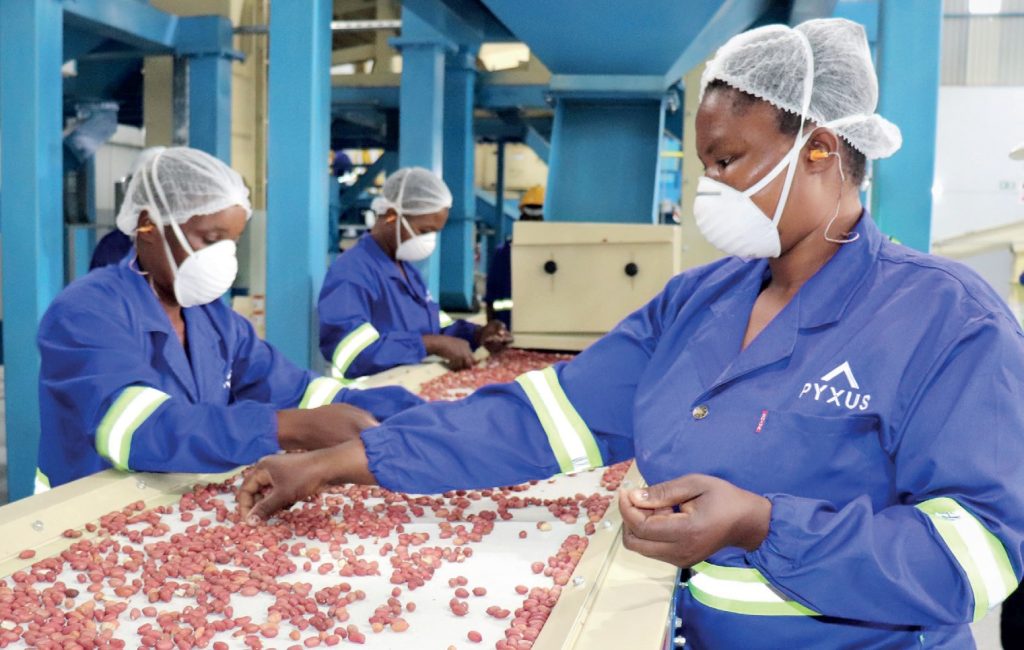
However, manufacturing employment fell from 4.3 percent of total employment in 2010 to 3.9 percent in 2025, highlighting the sector’s limited ability to absorb labour despite growth in output.
Reads the report in part: “The sector continues to be constrained by inadequate infrastructure, limited access to finance and technology, skills shortages and fragmented markets.”
In an interview on Monday, Ministry of Industrialisation, Business, Trade and Tourism spokesperson Patrick Botha said government continues to lay the groundwork needed to achieve its industrialisation targets through a combination of policy reforms, infrastructure development and private sector engagement.
He said that while progress is slow, some interventions are already being implemented while others require broader policy action and long-term investment.
“We are looking at the bottlenecks and how we can navigate them to meet our industrialisation goals,” he said.
National Planning Commission director general Frederick Changaya said in an interview on Monday that Malawi’s challenges emanate less from infrastructure gaps, but more in deep political economy and institutional failures.
He said what the country needs is an aggressive State intervention to industrialise.
AfDB observed that Africa’s manufacturing sector accounts for less than two percent of global output, underlining the scale of the challenge facing countries, including Malawi.
Malawi aspires to place industrialisation as one of the three pillars of the Malawi 2063, the country’s long-term strategy which seeks to turn Malawi into lower middle-income economy by 2030 and transition into an upper middle-income economy by 2063.